
Quick Links
Janai Purnima is another festival of great importance for Hindu People. It is generally celebrated on the Shrawan Sukla Purnima every year. This festival is celebrated by the Hindu people of Nepal and India and by Hindu people worldwide. It is also celebrated by Buddhist and Jain people with equal importance. Janai Purnima is known as ‘Rishitarpani‘, ‘Rakhsyabandhan‘, and ‘Kwati Purne‘.
In Hindu mythology, the demonic king Mahabali is believed to be so powerful that there is a threat among Gods in heaven. So, to prevent God in heaven, Lord Vamana, Lord Vishnu’s incarnation, offers Rakhshyabandhan to demonic King Mahabali to prevent him from hurting God in heaven. It is also believed that Lord Brihaspati, the teacher of Lord Indra, has started the Rakhsyabandhan ceremony to prevent demonic powers.

When is Janai Purnima 2026?
| Feature | Details |
|---|---|
| Date 2026: | 28 August, 2026 A.D. |
| Nepali Date: | 12th of Bhadra, 2083 B.S. |
| Also Known As | Raksha Bandhan, Kwati Punhi, Gunhi Punhi |
| Main Ritual | Changing the Janai (Sacred Thread) |
| Special Food | Kwati (Sprouted Nine-Bean Soup) |
In 2026, Janai Purnima falls on Friday, August 28. The Purnima Tithi begins on August 27 at 9:08 AM and concludes on August 28 at 9:48 AM.
Why is Janai Purnima Celebrated
Thus, Janai Purnima is the day to prevent oneself from misfortune and demon threats. People also celebrate this occasion to purify their sins and bring their family members peace, happiness, prosperity, and longevity. All cast of Nepal celebrates this festival. So, this festival has significance in creating unity in diversity and religious harmony in society.
Hence, as a whole, Janai Purnima is celebrated by renewing Janai, receiving Rakhsyabandhan, visiting different Kunda, eating Kwati, and enjoying with the family members.
The Ritual of the Sacred Thread (Janai)
The heart of this festival is the changing of the Janai, a sacred cotton thread worn by Hindu men (specifically Brahmin and Chhetri) who have undergone the Upanayana or Bratabandha ceremony.
- Purification: Devotees wake up early to take a holy bath in sacred rivers or ponds.
- Renewal: A priest chants powerful mantras to consecrate the new thread, which is then worn across the left shoulder.
- Symbolism: The six strands of the Janai represent control over the mind, speech, and body, reminding the wearer of their spiritual duties.
Renwing Janai
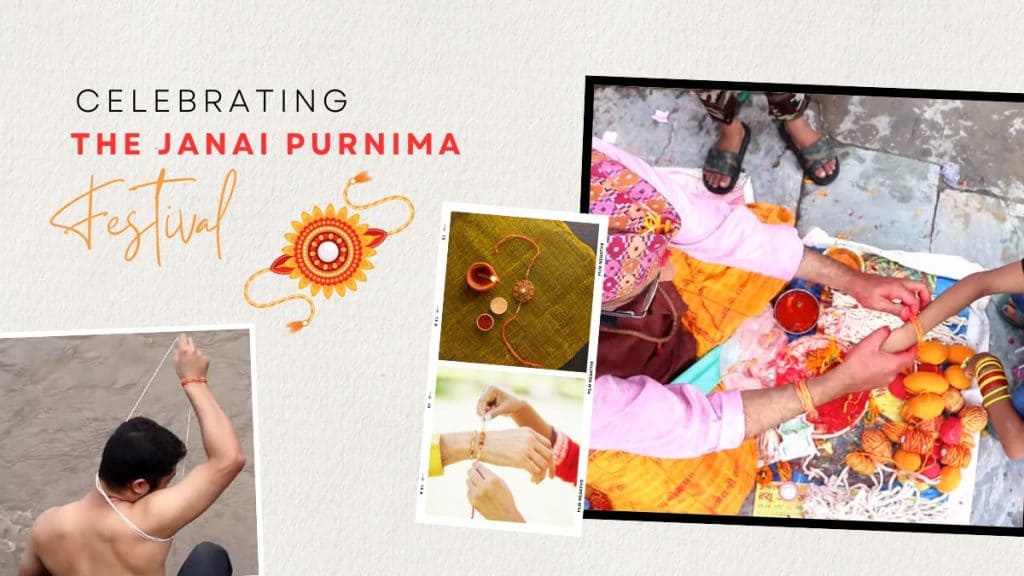
On this day, with the renewing of Janai by Brahmans and Chhetris, other people receive the sacred thread called ‘Rakhsyabandhan’ from Pandits and Purohits.
On Janai Purnima, family members and relatives gather at one place, visit different temples and enjoy themselves by eating delicious foods. And on this occasion, the devotee overcrowded various sacred ponds and lakes of Nepal.
During this ceremony, many devotees often visit Gosaikunda of Rasuwa, Nepal. They take a bath there and perform various rituals, chanting mantras. They renewed their sacred thread called ‘Janai’ in the Nepalese dialect.
Kumbheswor Kunda of Lalitpur is another sacred place that a devotee overcrowded during this occasion. Along with this, Badimalika of Bajura and Khaptad Triveni of far western Nepal, Pach (five) pokhari and Bhairab Kunda of Sindhupalchowk, Sailung Kalinkchowk of Dolakha and Dudhkunda of Solukhumbu Nepal are the sacred places to where pilgrimage often visit to perform activities of Janai Purnima.
Major Celebration Hubs in Nepal
While the festival is celebrated in every household, major gatherings occur at:
- Pashupatinath Temple (Kathmandu): Thousands gather for mass thread-changing ceremonies.
- Kumbheshwar Temple (Patan): Famous for the sacred pond and grand rituals.
- Gosaikunda Lake: A high-altitude pilgrimage site where thousands of devotees trek to take a holy dip in the freezing waters.
How Raksha Bandhan Celebrate in Tarai?
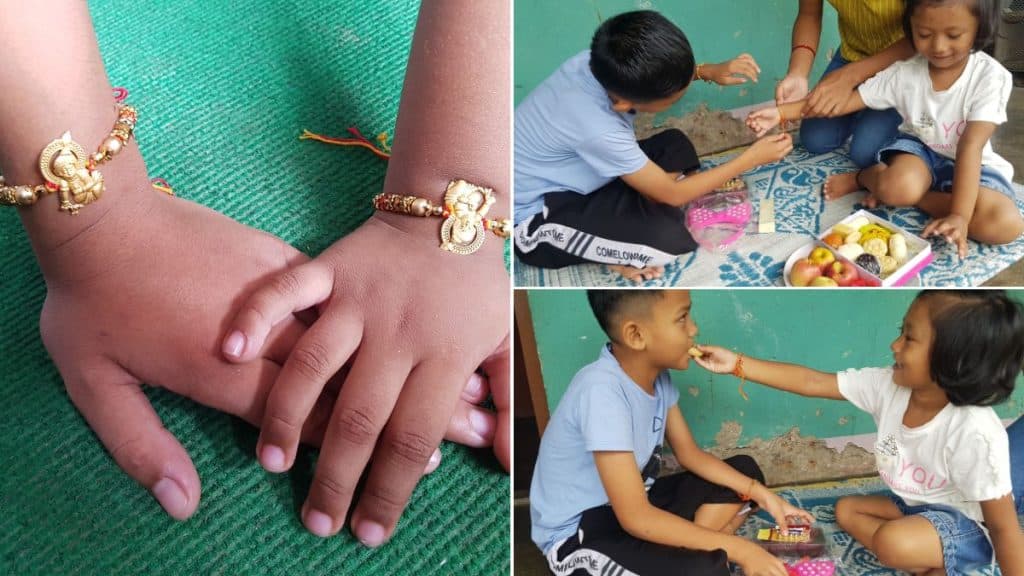
In the Terai region of Nepal, this day kept special meaning for brother and sister. On this day, the sister puts Rakhsa bandhan (also called ‘Rakhi‘) in their brother’s hand and prays for the prosperity and longevity of the brother and provides him delicious food and sweets. In return, the brother also put Rakhi on their sister’s hand and prayed for the sister’s prosperity and longevity along with beautiful gifts. This helps to make the relationship between brother and sister warm and even stronger than before.
Raksha Bandhan: A Bond of Protection
Janai Purnima is also widely celebrated as Raksha Bandhan. On this day, sisters tie a colorful Rakhi or a protective thread (Doro) around their brothers’ wrists.
- The Promise: Brothers vow to protect their sisters from harm.
- The Blessing: In return, sisters pray for their brothers’ long life and prosperity.
- The Ritual: This tradition reinforces the deep emotional and social ties within Nepali families.
Celebrate as Kwati Purnima in Newar Community
People of the Newari community celebrated this day as ‘Kwati Purne‘. It is believed that the body may become weak due to hard work in the field for plantation during the rainy month. So, to strengthen the body and prevent colds and other diseases, people eat soup of nine different bowls of cereal on this day.
These cereals are soaked in water and cooked and eaten after sprouts come in it, known as ‘Kwati’ in the Newari dialect. Nowadays, every Nepalese performs these activities due to their health benefit as well. Also, people of the Newari community worship frog on this day as it is regarded as the courier of rain which affects the plant’s productivity in the field.

Kwati Punhi: The Feast of Nine Beans
In the Newari community, Janai Purnima is celebrated as Kwati Punhi or Gunhi Punhi.
- Special Dish: The highlight is Kwati, a nutritious soup made from nine different types of sprouted beans.
- Health Benefits: Traditionally, Kwati is believed to boost the immune system and provide warmth during the monsoon season.
- Cultural Offering: Newars also offer food to frogs in the fields as a gesture of gratitude for the rain and a good harvest.
Also Read: How do Celebrated Tihar Festival in Nepal

What is the exact time to prefer it ?